Osaka has always been different. Where Tokyo is restrained, Osaka is exuberant. Where Kyoto preserves, Osaka creates. Japan's third city is loud, generous, funny, and deeply serious about the things it cares about — above all, food and design.
The Osakans have a saying: kuidaore — "eat until you drop." It captures the city's ethos perfectly: a passionate, almost reckless commitment to pleasure, to the experience of things done well, to the communal joy of good food and loud laughter. But beneath this surface exuberance lies a city of extraordinary craft and aesthetic depth.
The Design of Food: Osaka's Culinary Aesthetic
Japan has more Michelin-starred restaurants per capita than any country in the world, and Osaka has more than its share. But the city's relationship to food is not primarily about fine dining — it is about the daily culture of eating well at every level, from the standing ramen bars of Namba to the centuries-old sushi masters of Kitashinchi.
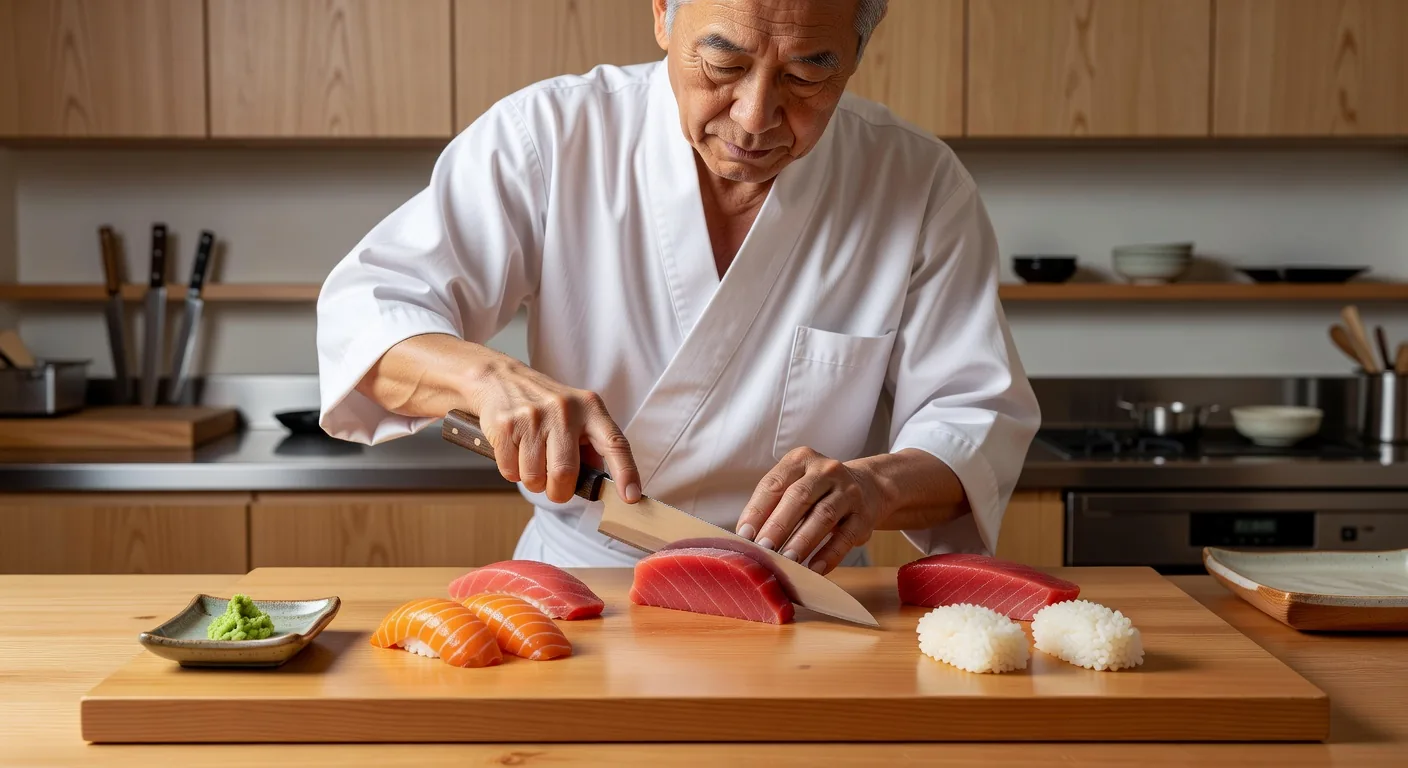
What is most interesting about Osaka's food culture from a design perspective is the visual and spatial intelligence that Japanese food culture carries: the perfect proportion of rice to fish in a piece of nigiri; the geometry of a bento box, every element sized and positioned to create a harmonious whole; the staging of a kaiseki meal, in which twelve or fifteen courses unfold as a narrative about the season. These are design problems solved with extraordinary sophistication.
"In Osaka, food is not fuel. It is the primary medium of culture — the way the city thinks about pleasure, community, and the art of attention."
Sumo: The Architecture of Contest
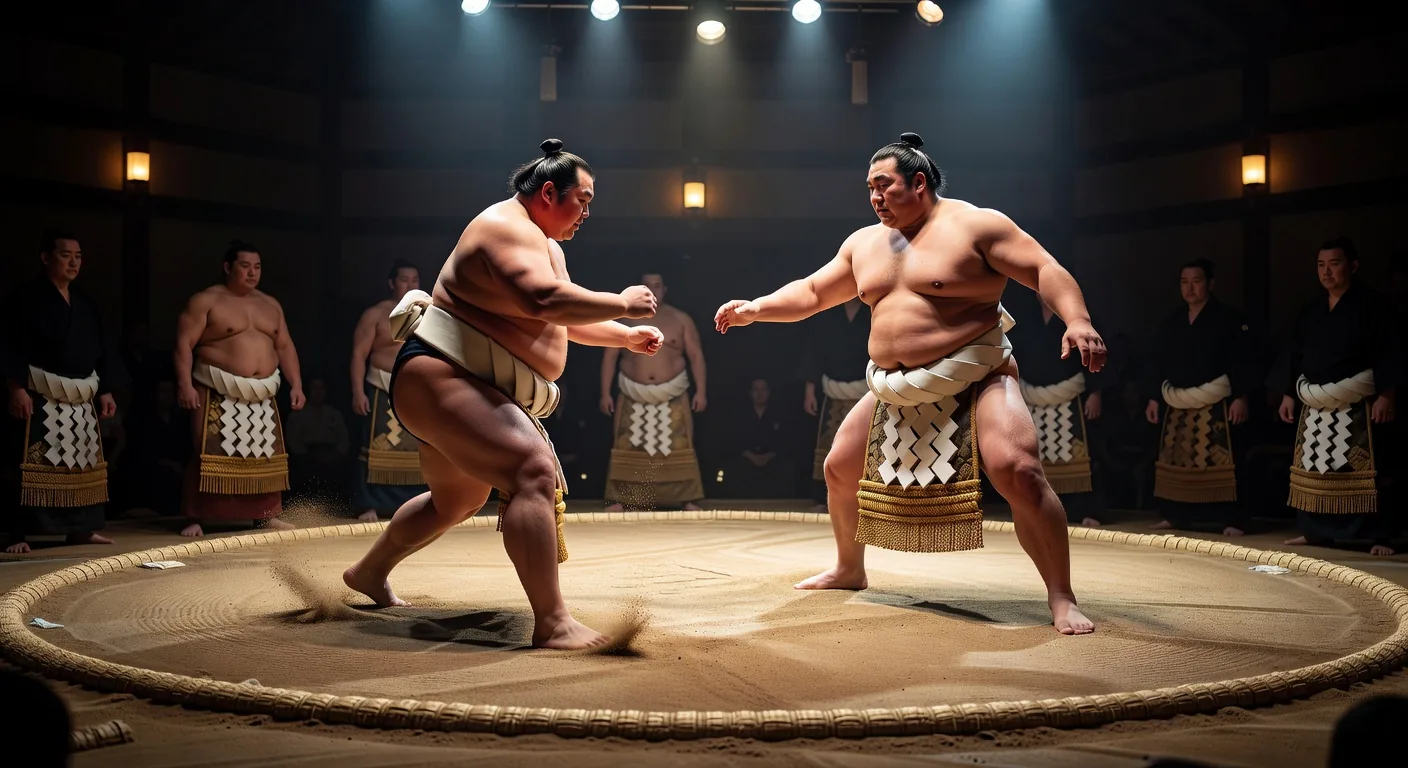
Osaka hosts one of the six annual Grand Sumo Tournaments — the Haru Basho in March — at the Bodymakers Colosseum near Namba. For design and culture enthusiasts, sumo is an unexpected aesthetic experience. The ring itself — the dohyo, a raised clay platform surrounded by a thick rope of twisted rice straw — is a piece of sacred architecture. The wrestlers' approach ceremonies, the referee's elaborate silk costume, the audience's protocol of appreciation: all of these are elements of a total aesthetic system whose design philosophy has barely changed in 1,500 years.
Architecture: Old and New Osaka
Osaka's architectural heritage is less intact than Kyoto's — the city was heavily bombed in the Second World War and rebuilt with characteristic energy — but what survives is extraordinary, and what has been built since is often remarkable.
Osaka Castle District
The reconstructed Osaka Castle (1931) stands in a park containing the remains of the original 16th-century fortification. The castle's white plastered walls and curved eaves are quintessential Momoyama architecture.
Nakanoshima
The island district of Nakanoshima contains some of Osaka's finest Meiji-era and pre-war architecture alongside contemporary cultural institutions — a compressed architectural history of modern Japan.
National Museum of Art, Osaka
César Pelli's entirely underground museum — its entrance marked only by a dramatic steel sculpture rising above ground level — is one of the most distinctive museum buildings in Japan. The permanent collection focuses on postwar Japanese and international art, and the architecture creates a sequence of arrival and entry that is genuinely dramatic. Visit on a weekday morning when the light and the quiet allow the building to speak.
Neighborhoods Worth Exploring
Minami (Namba, Shinsaibashi, Dotonbori) is Osaka's entertainment and shopping heart — loud, neon-lit, and relentlessly energetic. The Dotonbori canal at night, its surface reflecting the giant moving billboards above, is an exercise in spectacular commercial excess that has its own kind of beauty.
Nakazaki-cho is the antidote: a small, quiet district of converted prewar buildings — now boutiques, coffee shops, and studios — that feels remarkably calm at the edge of one of the world's most frenetic city centers. The neighborhood has attracted a concentration of young designers and makers whose work reflects a genuinely Osaka sensibility: direct, warm, playful.
Shinsekai is a district that time forgot and then remembered. Built to resemble New York and Paris in 1912 — a strange ambition that produced an equally strange result — it fell into decline in the postwar years and has recently undergone a subtle renaissance, its retro towers and kushikatsu restaurants drawing visitors who appreciate a different kind of urban beauty: the beauty of places that have lived through change and carry their history lightly.